Edward Scissorhands – Review
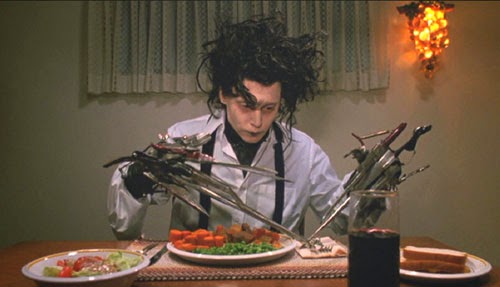
Figure 1. Edward struggling with the suburban lifestyle
(c1990)
Edward Scissorhands
is a movie released in 1990, directed by Tim Burton. It is about a boy with
scissors for hands who gets found by a lady who takes him into her home and
tries to integrate him into a suburban household. Once found he is brought back
to the family house and the family adopts him. The boy has difficulties
adapting as he constantly accidentally breaks things around the household or
cuts his own face with the sharp scissors he has for hands “Edward is a hazard,
slicing gashes in his chalky face every time he wipes away a stray hair” (Travers,
1990:2) but is very popular with the neighbourhood. After a while, his
innocence gets taken advantage of and the very people he trusted start manipulating
him which slowly escalates. Late in the movie Edward’s clumsiness with his
hands causes him to accidentally lacerate the young boy of the family who
adopted him. He then flees back to his own home followed by an angry mob of suburban
villagers in a scene similar to the finale of Frankenstein.
The theme of the movie is about being different and acceptance.
This is shown in the colours, shapes,
people and general feel and atmosphere. The village is portrayed in pastel
colours that have a bubble gum look demonstrating perhaps an exaggerated stereotype
of the typical American suburban family and their lives. Edward’s castle on the
other hand is in black and white which is in contrast to the colourful village illustrating
perhaps a difference in their lifestyles with Edward being secluded and alone
while the villagers lead very mainstream social lives of the happy family in American
suburbia.
The movie also employs
the use of shapes, for example the village houses are all bungalows which have the
same box shape with a square garden and garage “They live, in Avon-like propriety,
within the portals of well-ordered houses that look like boxes of cosmetics.
They are pastel pink and blue and green, and very, very neat.” (Malcolm,
1991:2) while Edwards mansion is much bigger, has stories and every wall is
crooked which ones again tells the difference between them. Perhaps showing the
differences in upbringing, lifestyle and culture between Edward and the
suburban families.
Another example would
be Edward’s hands, the director could have chosen anything but he went for very
dangerous looking scissors which look out of place, a bit like Edward himself.
These scissors are also the vessel for his talents in creating beautiful works
of art. “Meanwhile, Edward finds himself a local celebrity after the town
realizes that his talents include creative hedge trimming and an unrivaled
ability to cut hair.” (Thompson, Unknown:2) His hair, which is black and
messy also stands in a high contrast to the villagers, perhaps physically
demonstrating the difference between them to the viewer.
The movie plays
heavily on stereotypes. The villagers all have a very typically American suburban
lifestyle which is expressed in the same house shapes, same male lifestyle, every
family having one dog and one car and all the housewives meet up at the corner
to gossip, the village has one god fearing girl that plays hymns and warns
everyone about the disaster to come, their excitement and later disgust about
everything different.
The movie ends when Edward
gets chased by the mob of angry villagers back to his home in a very familiar
Frankenstein like scene perhaps portraying that such diversity between
neighbours is difficult to overcome. “As in Burton's other films (Pee-wee's
Big Adventure, Beetlejuice and Batman), the outsider soon becomes
the outcast, and the laughs are soon tinged with melancholy.” (Travers, 1990:2).
The overall theme and conclusion of the movie seems to be the cycle of
acceptance and rejection that eventually occurs in others movies made by Tim
Burton and plays on the sympathy of the audience to the hero’s plight.
Illustration List
Figure 1: Burton, Tim (1990) Edward struggling with the
suburban lifestyle [Still of Edward Scissorhands] Available from: http://theironcupcake.wordpress.com/2012/05/30/indelible-film-images-edward-scissorhands/
(accessed on 10/11/2014)
Bibliography
Travers, Peter. (December 1990) Edward Scissorhands. http://www.rollingstone.com/movies/reviews/edward-scissorhands-19901214
(accessed on 10/11/2014)
Malcolm, Derek. (July 1991) Edward Scissorhands. http://www.theguardian.com/film/News_Story/Critic_Review/Guardian_review/0,,558617,00.html
(accessed on 10/11/2014)
Thompson, Caroline. (Unknown) Edward Scissorhands – Movie Info. http://www.rottentomatoes.com/m/edward_scissorhands/ (accessed
on 10/11/2014)


